Beyond the Upside Down: Bringing D&D to the Next Generation
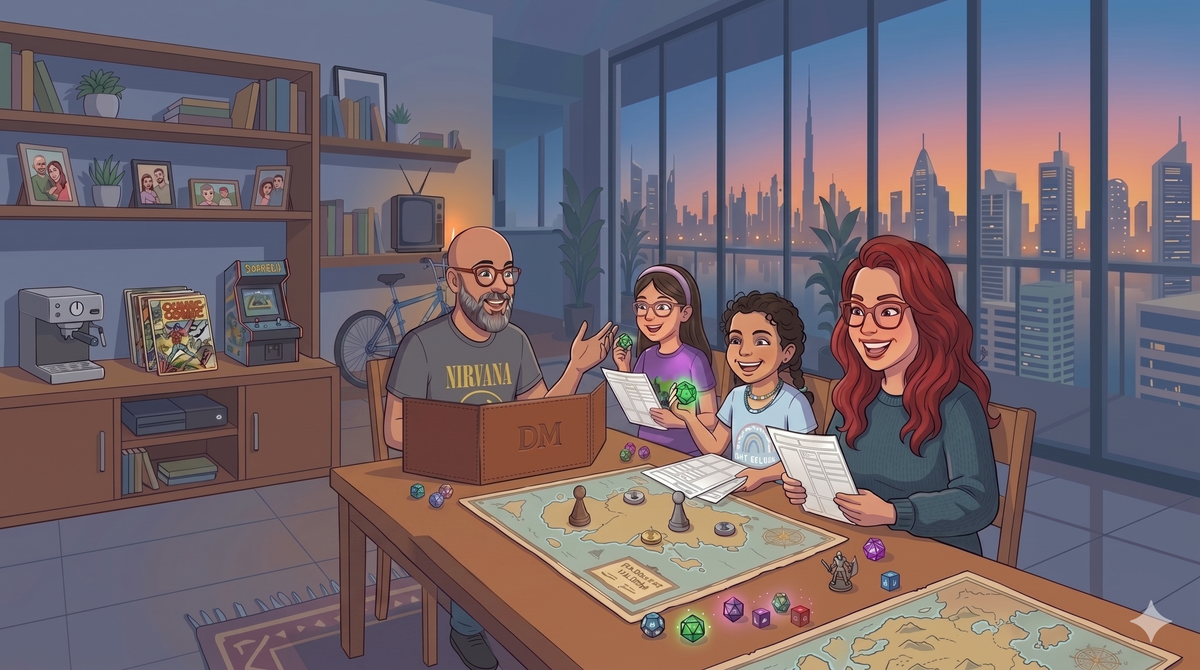
Last year marked the final season of a Netflix series I loved: Stranger Things. The 80s nostalgia, the music, the kids on bicycles. It all mirrored my own experience growing up in the mid and late-90s. It hit me hard, but it also made me realize I missed something much deeper than just the era.
Back in the day, I spent hours playing Dungeons & Dragons with my neighbor. Later, through high school and university, it remained part of my social life. Watching the show reminded me how much joy those roleplaying games brought me, and I knew I wanted to bring that magic back.
I began planning how to introduce my wife, Giselle, and my daughters, Antonietta and Elise, to the game. I needed a kid-friendly, engaging campaign that would ensure they both had as much fun as I did decades ago.
While planning, I realized that the role of a Dungeon Master is super similar to project management. It requires extensive preparation and organization to ensure the "project" (the campaign) runs smoothly. As I researched, I also looked into the developmental benefits of roleplaying for children. I was already using the game to sneak in some math, reading, and writing to reinforce their schoolwork, but I discovered several other benefits I hadn't considered:
1. Social and Emotional Development
Tabletop RPGs naturally require players to communicate, cooperate, and negotiate to solve challenges and complete quests. Research shows these games help develop empathy and perspective-taking—skills that align perfectly with social and emotional learning frameworks. Playing as a family strengthens our connection because we have to truly listen to one another and respond to evolving dynamics in real time.
2. Creative Problem-Solving
RPGs are inherently imaginative. Players don’t just follow a script; they shape the narrative by making choices and solving complex, open-ended problems and sometimes following a path the Dungeon Master didn't consider. This encourages "divergent thinking" (the ability to find flexible approaches to challenges). When we brainstorm solutions together, we’re practicing reasoning and hypothesis testing in a low-pressure and playful environment.
3. Emotional Resilience and Well-Being
Studies suggest that roleplaying offers significant psychological benefits, including stress relief and increased resilience. Embodying a character provides a safe space to experiment with different identities and emotions that might feel "too much" in real life. It’s a form of playful personal growth.
4. Reducing Anxiety through Connection
Structured roleplaying can help reduce social anxiety by providing a supportive context for interaction. The cooperative nature of the game, working toward shared goals rather than competing, fosters a sense of belonging. This is especially valuable for both children and adults who prefer collaborative environments over competitive ones.
5. Narrative Engagement and Self-Expression
At its core, D&D is about storytelling. Playing a role allows us to express ourselves, test new ways of thinking, and explore different personalities. It’s cognitively stimulating and emotionally rich, giving the kids (and me) a chance to exercise our imaginations in a safe, creative space.
I wish I had known all of this back when people told me I was "wasting my time" imagining I was riding dragons or silently infiltrating a cave to recover a magical item. Knowing what I know now, I’m definitely making this a permanent part of our family time.
If anything you read resonates with you or you think are interesting, consider subscribing, it's free and you'll get everything I write directly in your inbox.