Designing Payloads for Long Term Stability
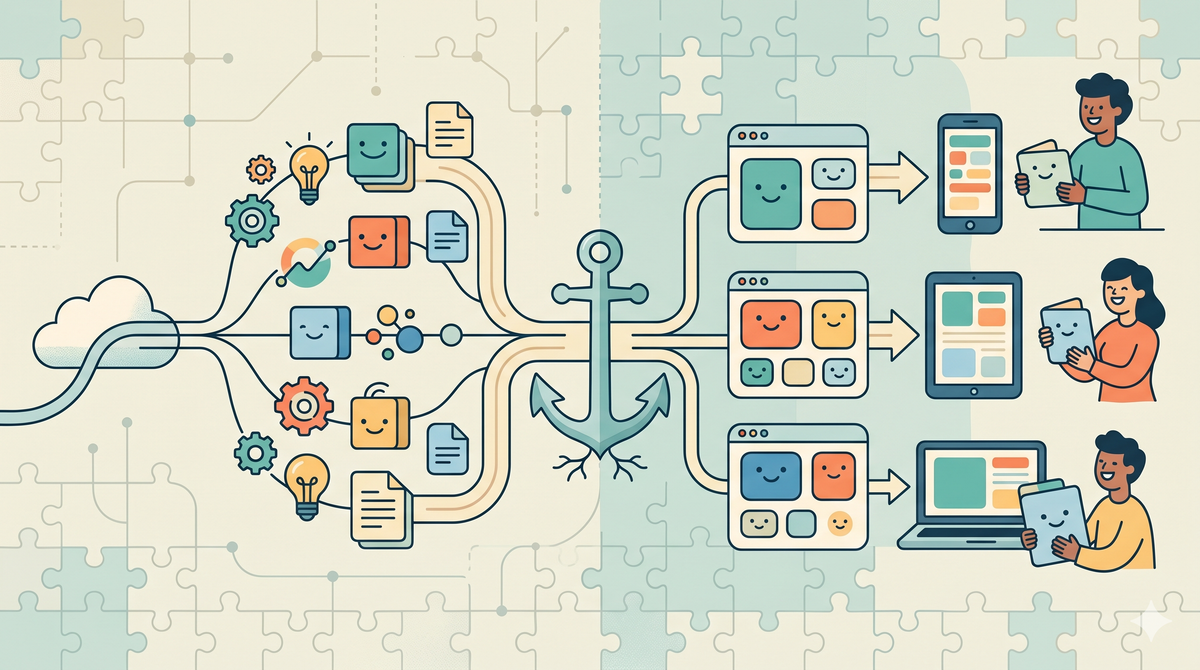
Payload design is one of the most interesting, powerful and often overlooked aspects of API architecture.
While URLs define how resources are addressed, payloads define how information is exchanged. Poor payload design can lead to performance issues, excessive network traffic, and fragile client implementations.
Designing good payloads requires balancing competing goals, on one side you want the clients to have everything they need when they need it, while on the other hand you want to optimize what you send so that clients don't have a lot of information they won't use.
The problem of over and under fetching
When a payload contains too much information, clients waste bandwidth processing data they do not need, this is bad in environments with slow network or expensive carriers that charge a lot for extra usage on mobile data packages. When it contains too little, clients are forced to make additional requests to retrieve related data, resulting in additional requests, which affects latency and user experience.
Consider an endpoint that returns an author resource:
GET /authors/13201
A minimal response might include only the author’s basic information and a list of book identifiers:
{
  "name": "JRR Tolkien",
  "nationality": "British",
  "books": [101, 102, 103]
}
This keeps the payload small but forces the client to make additional individual requests for each book in the list.
An alternative approach embeds a subset of book information directly in the response:
{
  "name": "JRR Tolkien",
  "nationality": "British",
  "books": [
    {
      "id": 101,
      "title": "The Hobbit",
      "publication_year": 1937
    }
  ]
}
This reduces the number of round trips at the cost of a larger payload which contains exactly what the client must display in the current screen along with enough information to retrieve the full book resource if it needs to display a detail screen for the book in question.
Optimizing for the common case
There is no universally correct answer to how much data should be included in a payload. The right choice depends on how clients actually use the API.
If most clients display a list of books along with basic metadata, embedding that information makes sense. If detailed views are rare, it is inefficient to include full representations by default.
Usage analytics and real world observation should guide these decisions. Payload design is not static. It should evolve as usage patterns become clearer.
Avoiding tight coupling
Payloads should expose only what clients need and nothing more. Including internal identifiers, audit fields, or implementation specific flags increases coupling and makes future changes harder.
Fields included in a payload become part of the contract. Removing or changing them later can break clients.
A conservative approach to payload design favors explicit, well documented fields over convenience driven shortcuts, this applies to most of the things in terms Software Design and Architecture as well.
Supporting evolution
APIs rarely stay the same. Payloads should be designed to allow for extension without breaking existing clients.
Adding new fields is generally safe as long as clients are tolerant of unknown properties. Removing or changing existing fields should be avoided or handled through versioning.
For example, renaming of fields can be done by adding the new field with the value duplicated while it coexists with the old name. This favors contract extension and avoids breaking existing clients currently relying on the old name. You can give a notice to the API users that the field will be removed soon and thus they should migrate to the new field name before the removal date.
Clear payload structure, consistent naming, and predictable types all contribute to long term stability.
Designing good payloads is not about perfection on day one. It is about making informed trade offs and revisiting them as the system grows and you get more and more data about how the API is being used and what the users need from it.
If you like what you've read so far or resonate with my opinions, subscribe to my mailing list, it's free and you'll get all my writings twice a month on your inbox.