Designing my attention: defaults over discipline
Every day we are bombarded with petabytes of information. Not only on the internet and social media keeping up with the world news and latest trends and memes and, lately, we all must keep up with the constantly evolving GenAI world that has taken over the world. There's certainly a lot of noise out there and it becomes exponentially difficult to keep ourselves focussed every day.
Digital Minimalism is presented as a radical lifestyle change, people talk about quitting smartphones and buying "dumbphones" instead, turning screens black and white to avoid distractions, deleting every single app or disappearing from the internet whatsoever. I understand where this comes from, I tried it for a while but it never resonated with me and, more importantly, it didn't work with me.
I don't see Digital Minimalism as a religion, I see it as a set of practices that reduce my attention to my online life and focusses it on my real life. This doesn't mean I'll disappear from the internet, but I manage my online presence carefully so it doesn't consume all my attention and keeps me from doing things I want to do. My own approach is not about optimizing my use of technology, it's more about setting sane defaults and being clear on what I want technology to do for me. But how does it look like?
Devices
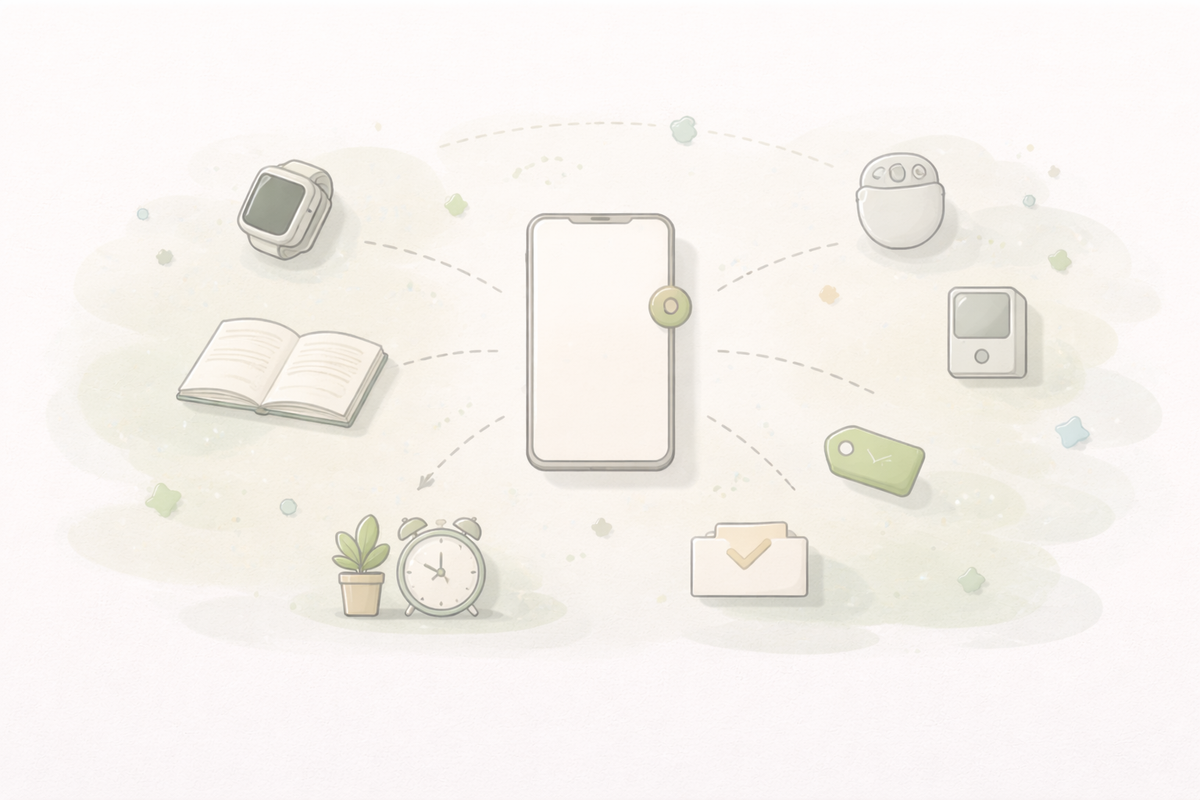
I own only two digital devices aside from my personal laptop.
- An iPhone
- A Kindle
The corporate laptop doesn't count because it's not mine, and I use it only for work, the same happens with the corporate phone, even though it's an iPhone as well, it only has company-approved apps for project management and corporate travel.
I don't have the screen in back and white or anything like that, just the regular setup with a few considerations I'll cover further on.
As you can see, I don't use a dumbphone. But I limit the number of devices I use. I have a strong opinion against smart watches because...
Notifications
I disabled most of the notifications in my iPhone, I don't want to get nudged because someone commented something on a post I published somewhere, I don't want to get nudged because I got an email. The only apps that has notifications enabled are WhatsApp, the only reason is because all my family uses it and if they message me, I want to be able to reply immediately if it's an emergency, all the group chats are muted though. And the Calendar because I don't want to be late or miss any appointment.
Because I don't have notifications, I don't need a smart watch. I find notifications annoying enough on my phone so I don't want them on my wrist. I use normal mechanical or quartz watches because I like them and they do what they are supposed to do and only that, tell me the time, a few minutes off is not and issue for me, I'm not a special forces or an intelligence operative who needs to sync watches with peers to the millisecond to coordinate actions.
I use notifications as a tool to inform me about things I need to know, not as a FOMO encouragement. When I check an app, I want it to be intentional, not because the app was nudging me for attention. I check my emails because I want to check them, I do so a couple of times a day. I open the delivery apps because I want to order something, not because I got a push notification about a deal in some restaurant. And that's what I do for most of the apps I use, I might miss a deal on a restaurant I like?, true, but if I miss it, it means it came at a time I didn't need it and I don't want a notification to create the need.
Other than that, I treat all the apps with messages or chat boxes as an asynchronous communication tool, people can reach out and text, but that doesn't mean I have to reply in real time. Notifications create that need for real time interaction when there's no real need for that.
Social networks
I was very active at Twitter (now X) at some point, also on Facebook and Instagram. But I noticed I got engaged in pointless and very emotional discussions, especially in Twitter (X) and Facebook. I also noticed I was falling into lifestyle creep thanks to Instagram and everyone's perfect lives (as shown in social media), I didn't like the person I turned into when I endlessly scrolled my Instagram feed.
In the end, most of the content creators I followed were that, creators, their content was produced to look in a certain way and just because they were, for example, playing those impossible arpegios in the guitar for the video, didn't mean they were actually doing that in one take, as I found out later on, sometimes they were not even playing. So I made a decision to close all my social media accounts.
I don't have Instagram, Facebook, Reddit, or X. I only actively use:
- LinkedIn: which I use strictly for networking and profesional purposes. It's my "self promotion" tool in some way. I post sometimes about technology and leadership and every time I post something on my blog, I share it there.
- SoundCloud: I use it mostly to upload my recordings: covers I make from other artists, etudes I work on to understand certain musical concepts and my own compositions as well.
- YouTube: as an educational tool, I mostly watch videos about music theory, guitar, technology/engineering and geopolitics. I don't scroll, I search for what I want to watch depending on what I'm learning or exploring.
I don't mindlessly scroll on any of those and the notifications are off on my phone. Again, I intentionally check them when I want to, if I'm at the doctor waiting and I don't have a book, I peek and reply if I have any messages.
I am keen to give BlueSky a try, it's similar to twitter but it seems less "rage-driven". Just for sharing things like I do in LinkedIn but with a broader scope, not only professional. For music someone also told me about BandCamp, which I will explore when I reach a point where I have more of my own music recorded.
By default, all the social networks I use have a purpose. I use them to spread a message, connect with people, share my work or ideas. They don't use me to improve their engagement metrics.
How's my approach different?
Many people try to manage their attention through constant and difficult self-control, to me defaults matter more than discipline.
Most people who talk about digital minimalism are constantly checking screen time dashboards, blocking apps during certain hours and setting rules they need to remember and enforce every day.
The problem with this approach is that it turns into another form of cognitive load, enforcing those rules and having to remember everything turns into a chore. I downloaded a new app, I have to add it to the block list, I have to disable notifications I have to... make a lot of decisions in order to keep my system in place.
I prefer to have the default behavior being already acceptable. If I don't use an app, I don't have to remember to ignore it. If my notifications are off by default, I am not tempted to open them.
This also mirrors the way I think about system and product design, the best decision is the one I don't have to make, in that sense, a good system or a good product is the one that reduces the number of decisions I have to make by simplifying my work.
A Quiet, Sustainable Choice
I don’t think of digital minimalism as a lifestyle or an identity. It’s closer to a default posture toward technology.
I want tools that support my work and relationships without constantly demanding attention in return. I want to be reachable, but not interruptible by everything. I want technology to fade into the background when I don’t need it.
This approach has been stable for me for years, which is perhaps the strongest signal that it works. It requires no ongoing effort, no periodic detoxes, and no rules I have to remind myself to follow.
Digital minimalism, at least for me, is not about rejecting technology. It’s more about refusing to let it decide how I spend my time and attention.
If you like what you've read so far or resonate with my opinions, please subscribe. It's free and I often share members-only content via email.